The 2026 AI Readiness Check-up: A Practical Checklist for Your Firm
Are you prepared for AI in 2026? This week we are taking stock. We will look at the foundations firms laid in 2025, so you can see where you are solid, where you have gaps, and what needs attention before the next wave of AI lands.
In 2025, most of the work was about foundations:
Aligning leaders so they pull in the same direction
Selecting secure AI tools
Creating and updating AI policies
Now, in 2026, those foundations meet the next phase: AI agents, smarter workflows, and tools that can act inside your systems.
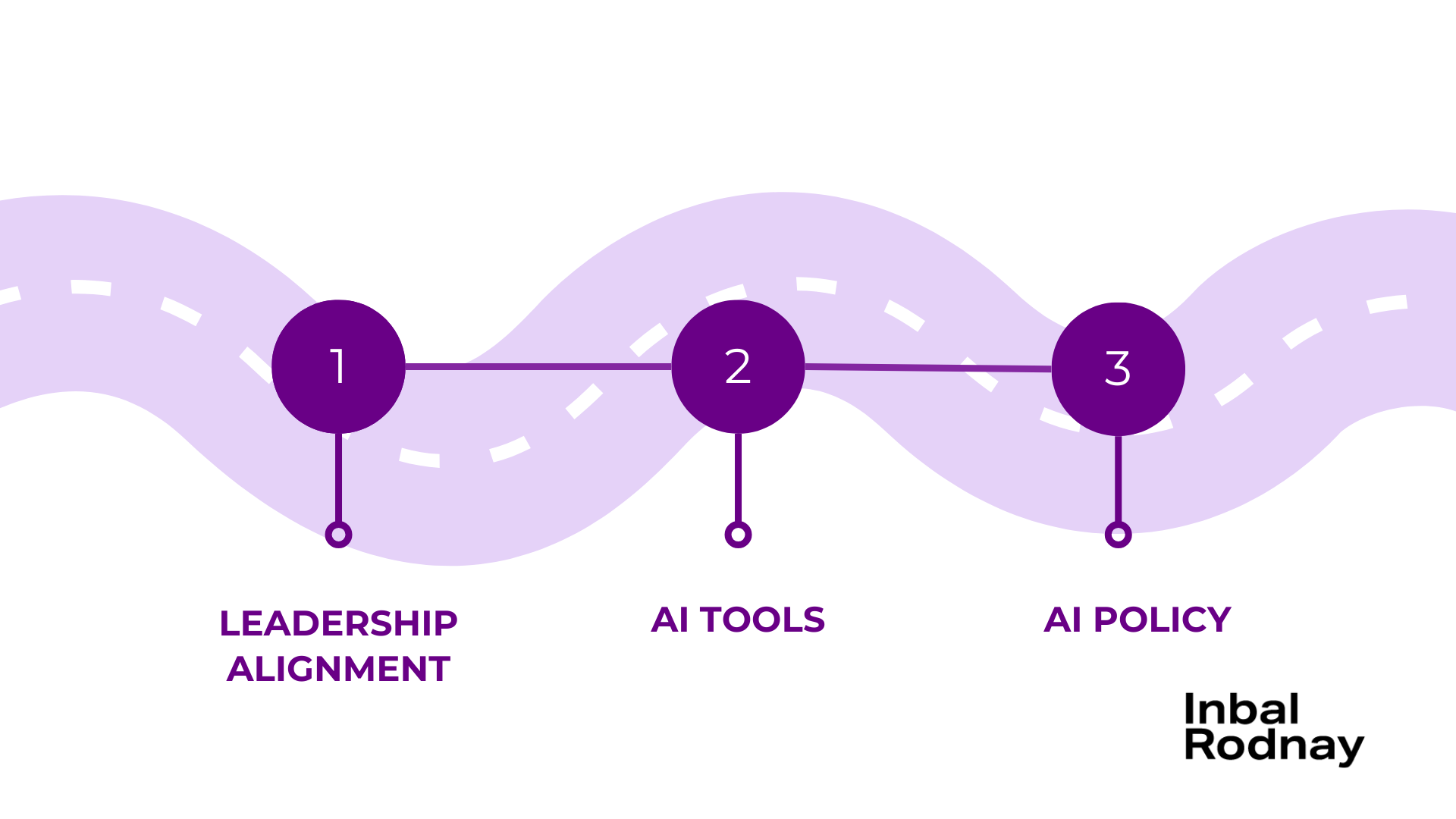
From AI Magic: 6 Steps for AI Mastery in Your Firm by Inbal Rodnay
1. Leadership alignment
Step one in any AI adoption framework is leadership alignment. In 2023 and 2024, and even early 2025, leaders were asking questions around data confidentiality, maintaining quality of work, and budgeting for AI tools.
By late 2025, those questions shifted. The conversations in well prepared firms became:
How do we fit AI into our workflow?
Where does it sit in our processes?
How do we give AI deep context in our clients and way of working?
So here is your first diagnostic question:
Do you still have anyone in your leadership team, or in any decision making role, who is:
Not convinced that you should invest in AI tools
Holding back on giving the team secure AI accounts
Still telling people to “use it, but do not put anything confidential in there”
If the answer is yes, that is a conversation to prioritise. You are leaking attention into conversations that belong in the past, not in the future.
2. Tool selection
The second step in the framework is selecting AI your tools.
I often talk about this as a radar:
The centre: tools and practices you must implement now, or you will fall behind
The second ring: emerging apps and use cases to watch and possibly pilot
The outer ring: noise you can (and should) ignore
In 2025 it became the norm for firms to provide a secure general purpose AI account, such as Microsoft Copilot (increasingly) or ChatGPT Business (in decline in our accounting and law), to all their staff. Not just to partners and managers, to everyone.
If, in 2026, you still only have AI tools in the hands of a few senior people, you are under-resourcing your team. AI is a work tool that everyone requires. It is how we work.
So your second question:
Does every person in your team have access to a secure, approved AI tool they can use and that can safely handle their every day client data.
If not, that is a concrete action item for this quarter.
3. AI policy
The third step is your AI policy.
Many firms drafted their first AI policy in 2023 or 2024.
Those early drafts covered primarilty:
Allowed AI tools
Handling confidential inforamtion
Clarifying that accountability stays with the human
In 2025 we had to update those policies so that they cover the current capabliities of the technology:
AI as part of automated background flows
AI powered browsers and their safe use
Giving AI tools access into client information in our practice management system, file management system, task system etc
Your policy now needs to speak to these realities.
If it doesn’t cover them, your staff will make their own best judgement. Are you comfortable with that?
So your third question:
Does your AI policy cover AI inclusion in automations, agentic capabilities of AI and the connection of practice data into AI tools?
If not, it is time for a review.
4. Our focus for 2026: from chats to agents
So what shifts in 2026?
We are moving from “AI that chats with us” to “AI that works with us”. You will start to see AI that takes action become the norm:
AI employees and agents that can take multi step actions
AI powered browsers that click around the web or your apps for you
Prompts that live inside your tools and pop up at the right moment
Traditional “if this then that” workflows with AI steps woven in
Connectors that let AI tools read context from your systems and, in some cases, write updates back
Right now, a lot of this sits with early adopters.
But this is moving fast and will become mainstream in 2026.
So your task is to create awareness. Be prepared. And start acting on the parts that mature.
Here’s your summary:
To pull this together, here is a simple checklist you can run this week:
Leadership
[ ] All leaders are aligned behind AI adoption
[ ] AI budget is in place
[ ] Leaders understand the next wave: agents
Tools
[ ] Every team member has access to secure AI tools
[ ] You have clarity on your AI radar: adopt, watch, ignore
[ ] You are creating awareness of the agentic capabilities of your chosen AI tools
Policy
[ ] Your AI policy has been reviewed within the last 12 months
[ ] It covers agents, background workflows, and AI powered browsers
[ ] You understand governance around AI agents: assessing, approving and monitoring them in your environment
If you see gaps in that list, now is the time to act.
What is next
In February I am running webinars that go deeper into these 2026 topics.
I am running separate sessions for accountants and for lawyers, so that we can look at workflows, use cases and apps that are relevant in their day.
I am designing these webinars for partners, practice managers and operational leaders who want to be early majority, not guinea pigs. We want to stay aware of what’s coming, and focus our operational attention on what actually works now.
—
Inbal Rodnay
Guiding Firms in Adopting AI and Automation
Keynote speaker | AI Workshops | Executive briefings | Consulting CIO
Want to receive these updates straight to your inbox? Click here: www.inbal.com.au/join
When you are ready, here is how Inbal can help:

Bring your entire team on the AI journey in just 30 days. This program is designed to give your team a solid foundation in using generative AI in responsible and impactful ways. Inbal helps you choose your AI tools, create an AI policy and train your team.

Want the confidence to set strategy and lead but don't have time to keep up with all the changes in tech?
Tailored for your needs, Inbal will works with you through one-on-one sessions to develop your technology literacy and keeps you up to date.

For CEOs, partners and business leaders. Everything you need to know about AI without the noise. Inbal shares the state of AI, recommends tools, and answers your questions about strategy, implementation and safe use.
Only what's real, no hype, no noise.
This is a one-off session for your entire leadership team.