Does Your Firm Have an AI Lab? It Should.
Do you have an AI lab in your business?
If you don't, you should. Whether you're a one-person firm or a hundred-person firm.
Let me tell you what I mean, and why it matters right now.
First: what the lab actually does
With everything happening in AI, someone in your firm needs to be watching. Keeping awareness of what's new, what's coming, what's changed. Assessing each piece of news. Is this relevant for us today? Does it need action? Or is it noise?
For every item that needs action, it splits into two streams.
Stream one is upskilling everyone. If there's a new feature or capability in a tool you're already using, say Copilot can now schedule prompts, you need to make sure everyone knows about it, understands it, and spends some time thinking about where it applies in their workflow. Simple things don't happen automatically. If you don't take action to push it through, it won't reach most. And you're missing out.
The maths here is straightforward. If you teach a hundred people how to use a new feature and it saves each of them five minutes, or uplifts the quality of one task by 10%, that is enormous value across a hundred people.
Stream two is the lab. For things that need more work. More technical knowledge. More experimenting. More hacking things together to see how they fit with your other systems. That's where the lab comes in.
And then there's governance. New capabilities raise new questions. Browsers can now act autonomously. Do we allow that? What are the risks? What needs to go into your policy? That all comes out of the lab too.
What the lab looks like
If you're a very small firm, the lab might just be a time allocation in your own calendar. If you're a 50 or 100 person firm, it's a group of two, three, or five people who catch up regularly, identify what's happening, and run experiments to figure out what's relevant and what to ignore.
Here is the single most important differentiator between the firms that make this work and those that don't.
Time allocation.
If people have time in their calendar where they're allowed to do these experiments, where they're expected to do them and share what they find, and where they are not penalised for productivity, magic happens.
If you expect people to do it on weekends, or at lunch break, or somehow magically on top of a full client load, it won't happen. It's too hard.
Why most labs are using Claude
Right now, most labs I'm involved with are experimenting with Claude, even when the organisation runs on Microsoft Copilot.
Why? Because Claude has capabilities that go further than what's currently built into Microsoft. Claude Code and Claude Cowork offer easier ways to build agents and automations than to achieve the same thing in a Microsoft environment. Claude also includes integrations into your Office apps that work significantly better than the built-in Microsoft capabilities.
I'm not suggesting that everyone in professional services drop Copilot and move to Claude. Most firms in regulated environments still stay on Microsoft Copilot for their main work. But their labs are increasingly playing with Claude, creating automations, experimenting with agents, understanding what's possible, in safe ways.
And here's the strategic value. What Claude can do today, Microsoft will ship to your Copilot environment in six to twelve months, with the security controls and guardrails your firm needs. So your lab running Claude tells you what's coming. It tells you what's worth building. And it means your firm is ready when those capabilities land.
One thing to be clear about: the lab needs to be informed and aware of security implications. AI introduces new risks, and the lab team needs to understand them and consider them in every experiment they run.
What do you do now?
Three things.
First, create the lab. If you're a multi-person firm, identify the people. You already know who they are. The tinkerers. The ones who play with technology. They can come from anywhere in the organisation.
Second, give them time. It can be a half day a week. It can be a half day a month. I know firms where one person has half their time allocated just to the lab, to experiment and build automations or who hire full time students or grads for this role. It's hard to allocate time, because the tinkerers are often your best accountant or your best lawyer. But it's worth it. They’ll get amazing results and they will be happier in their career.
Third, help them figure out how they're going to keep on top. What channels will they use? How will they filter what comes in? This newsletter is one way. But the better answer is community.
You can spend hours researching on your own, filtering noise, figuring out what matters, trying to assess what's real and what's hype. Or you can be part of a group of people doing the same work, in the same kinds of firms, sharing what they find and what they've built.
I'm developing a community that will launch by the end of June. Lab people from across accounting and law, getting updates together, doing the assessment together, sharing what they're experimenting with.
If you'd like to be included, reply to this email. I'll add you to the waitlist and let you know when we're ready to launch.
—
Inbal Rodnay
Guiding Firms in AI Adoption and Automation
Keynote speaker | AI Workshops | Executive briefings | The Tech Savvy Firm
Want to receive these updates straight to your inbox? Click here: www.inbal.com.au/join
When you are ready, here is how Inbal can help:
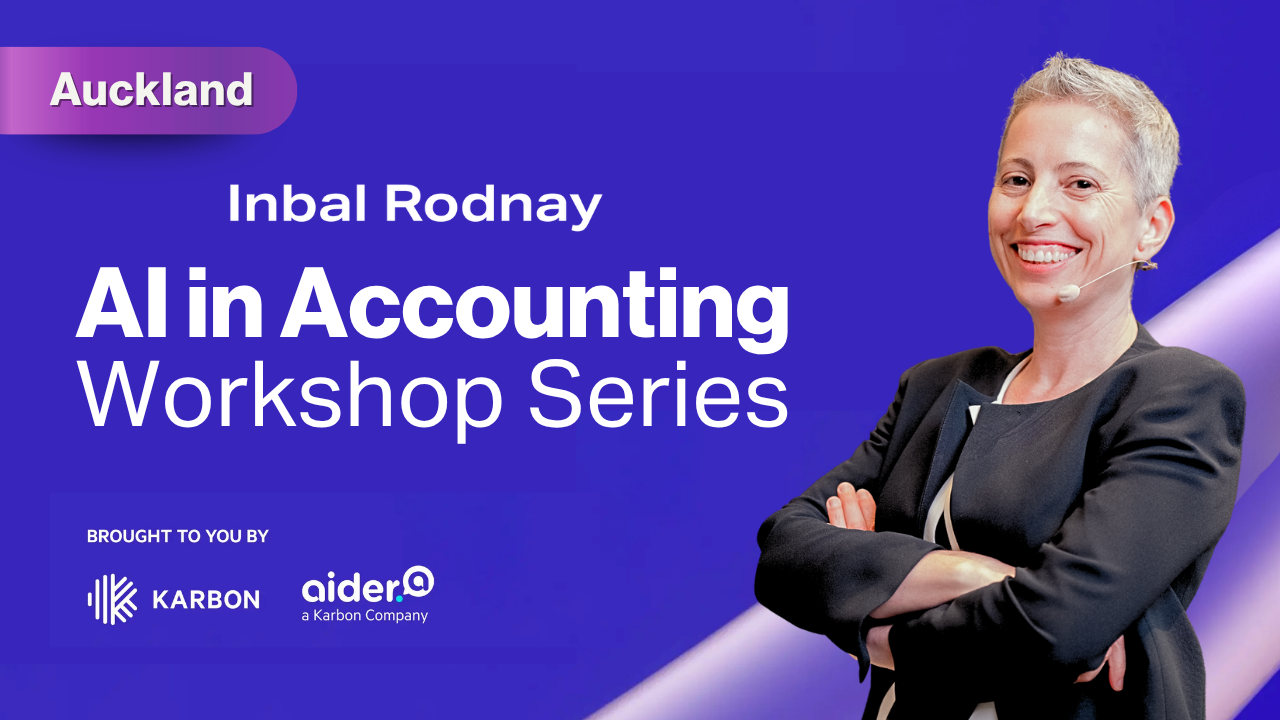
AI in Accounting Workshop Series (Auckland, 22 April)
- Learn what leading firms are actually doing with AI right now
- Build your own AI agent to take back and use in your firm
- Walk away with practical next steps you can act on immediately
Brought to you by Karbon and Aider
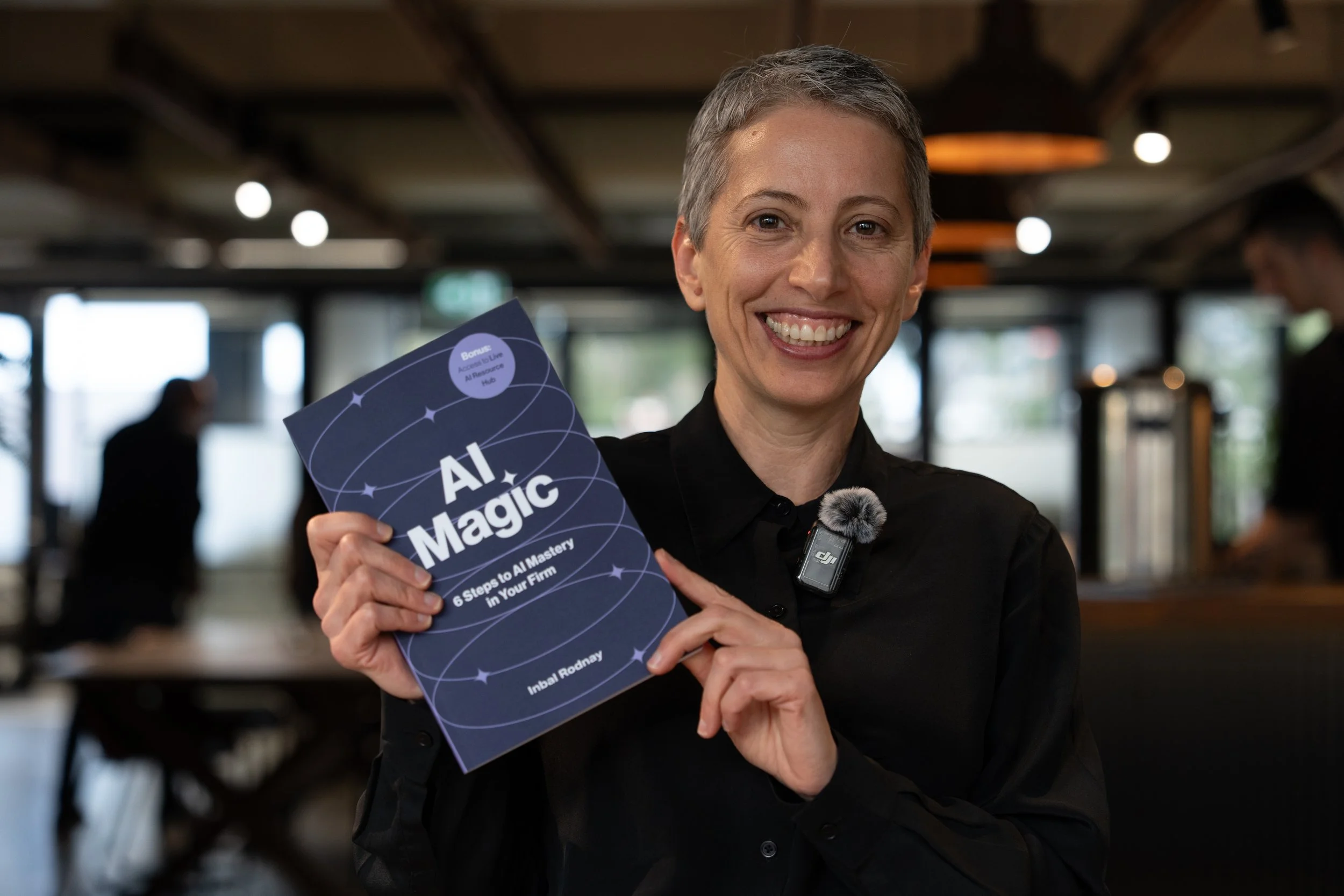
AI Magic: 6 Steps to AI Mastery In Your Firm:
- A step-by-step roadmap that shifts your firm from dabbling to safe, impactful AI Adoption
- A hands-on guide for mastering AI in your firm, solo practice, or team.
- Access to a live AI Resource Hub
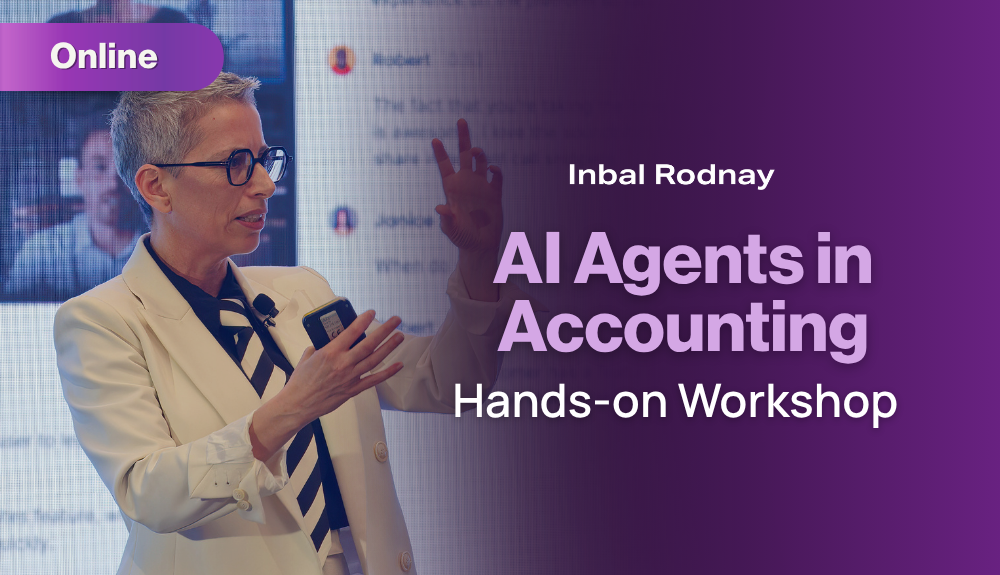
AI Agents in Accounting | Hands-on Workshop (Online, 24 July)
- Understand what AI agents can realistically do in accounting workflows, and how to design safe, sensible use cases.
- Build several working agents step-by-step and leave with reusable patterns for your practice or firm.
4 hours, online, interactive with breaks and Q&A