

Weekly AI Briefing
Every week: one AI development that matters to people in professional services, explained in plain English.
No hype, no fluff. Only what's mature and implementable today.
Looking for a specific topic?
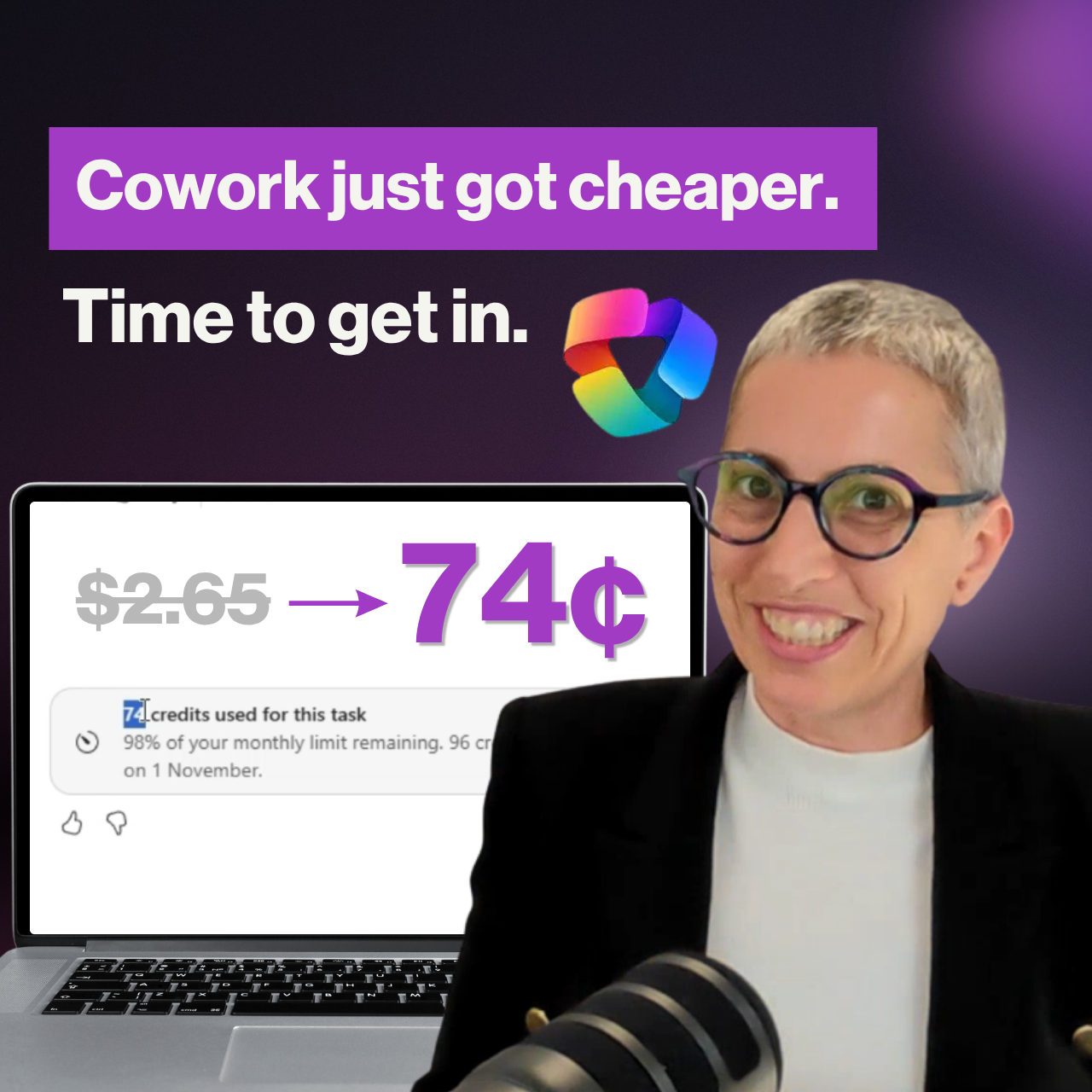
Cowork just got cheaper. Time to get in.
Today I want to convince you to get started with Cowork if you haven't already.
And if you’ve already started, I want to give you an idea of where it's going, because there's a lot happening regardless of the product you're using.
The two big things to be aware of:
in Copilot, the price of Cowork is dropping rapidly.
in Claude, Cowork is merging with chat, so there'll only be one.
Can you put client information into Claude?
Claude is getting increasingly popular with professionals in highly regulated industries.
There is no question that it's good. It's fantastic, it brings a lot of joy.
But I am still hearing a lot of debate around whether can we share confidential information with it.
So let's understand first why we're asking, and then go into the details.
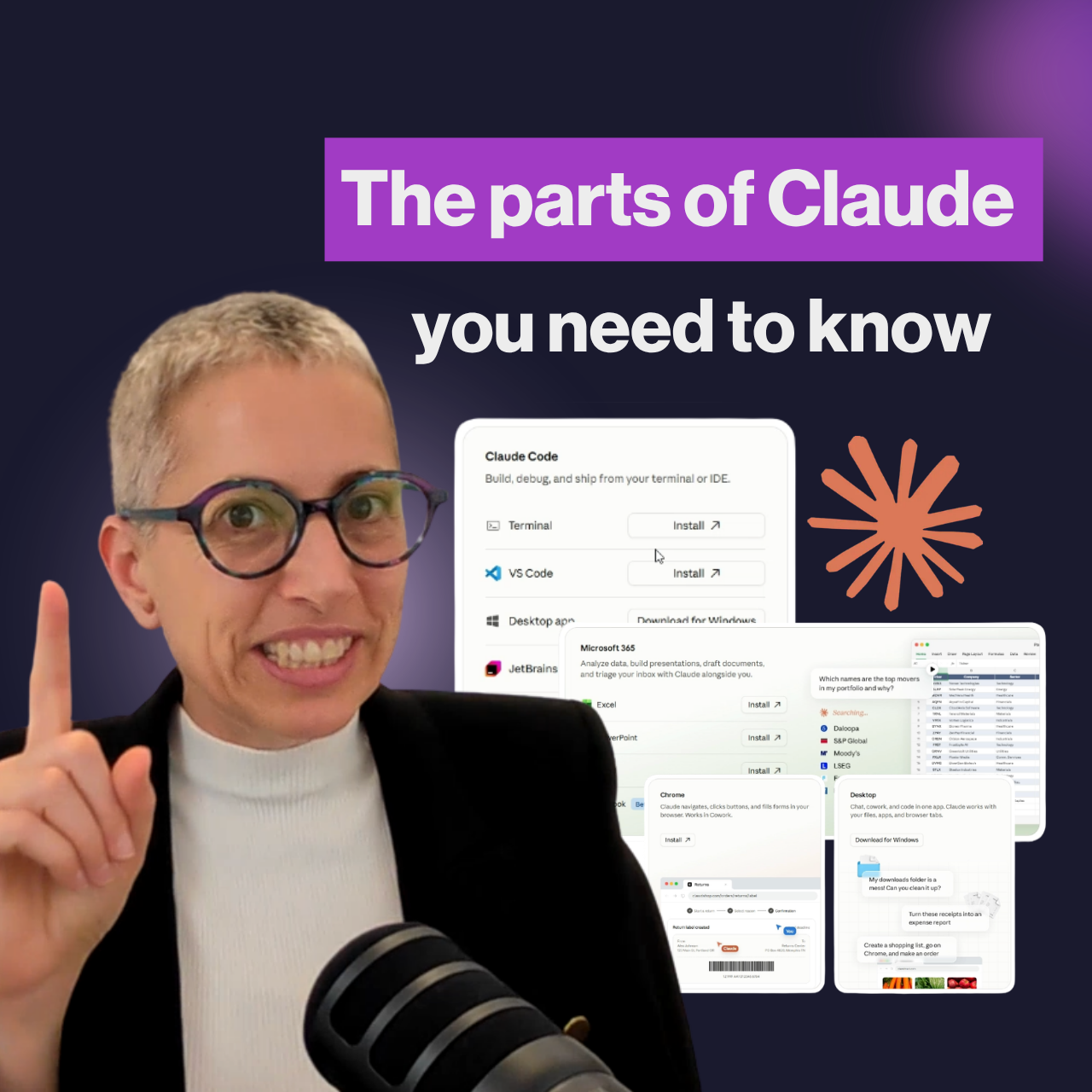
The parts of Claude you need to know
If you're using Claude but you're only using it in the browser, you're missing out.
And worse than missing out, you're actually taking a bit more risk and giving up all of the reward.
Claude hasn't always been this popular with accountants and lawyers, or generally with professionals in highly regulated environments.
But that has changed.
In the last implementation session at our AI club, we had a breakout room specifically for Claude, and half the people online joined it.
Accountants are starting to use Claude. A lot.
So let me tell you about a thing I did with Claude last weekend, and then I'll show you the tools I used to make it happen.
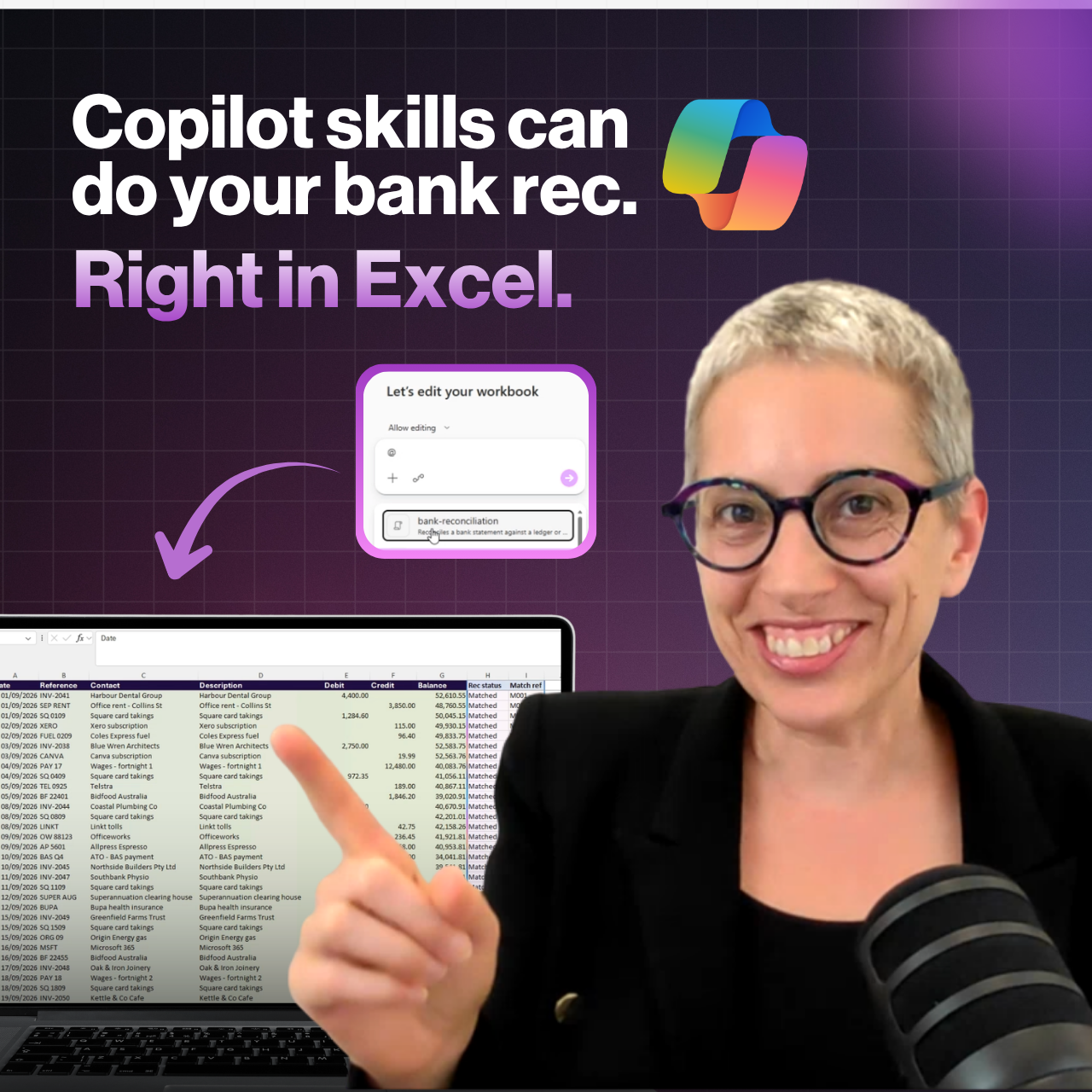
Copilot skills can do your bank rec. Right in Excel.
Copilot now has skills in Excel. Yay!
I find this very exciting. Let me show you why.
How I actually prompt: chat vs Cowork
I asked my AI to go through our chat history and tell me how I actually prompt. Not how I teach people to prompt. How I actually do it every day.
It came back with two lists. One for chat, one for Cowork.
Makes sense.
Because prompting for Cowork is different from prompting in chat.
One is a conversation. The other is delegation.
Here are the top three in each.
Your clients have Copilot too. Are you ahead of them?
My accountant asked me to review the activity statement.
Usually when they ask me to do this, I go into the accounting app and I spot check transactions.
I look for big amounts, I look for suppliers that should be with GST or without.
Really, I am not entirely sure how to know that I covered everything.
So this time...
Copilot can finally make documents that actually look like yours
Hallelujah.
AI is finally really good at making documents that look and sound like we want them to.
It’s been a struggle for a long while. Getting AI to write in our brand voice. Getting documents in the format we like them, with our brand headers and footers and the images and the structure of the document.
But we are there now, and I want to show you the best way I know how to do it.
Accountants reconsider their app spend
Last year you got good at asking AI questions.
This year the question is different: what will you hand over to it entirely?
That's the shift from a prompt to an agent. A prompt gets you an answer. An agent goes and does the job.
And accountants are starting to build them. Which means they are also starting to stop paying for software.
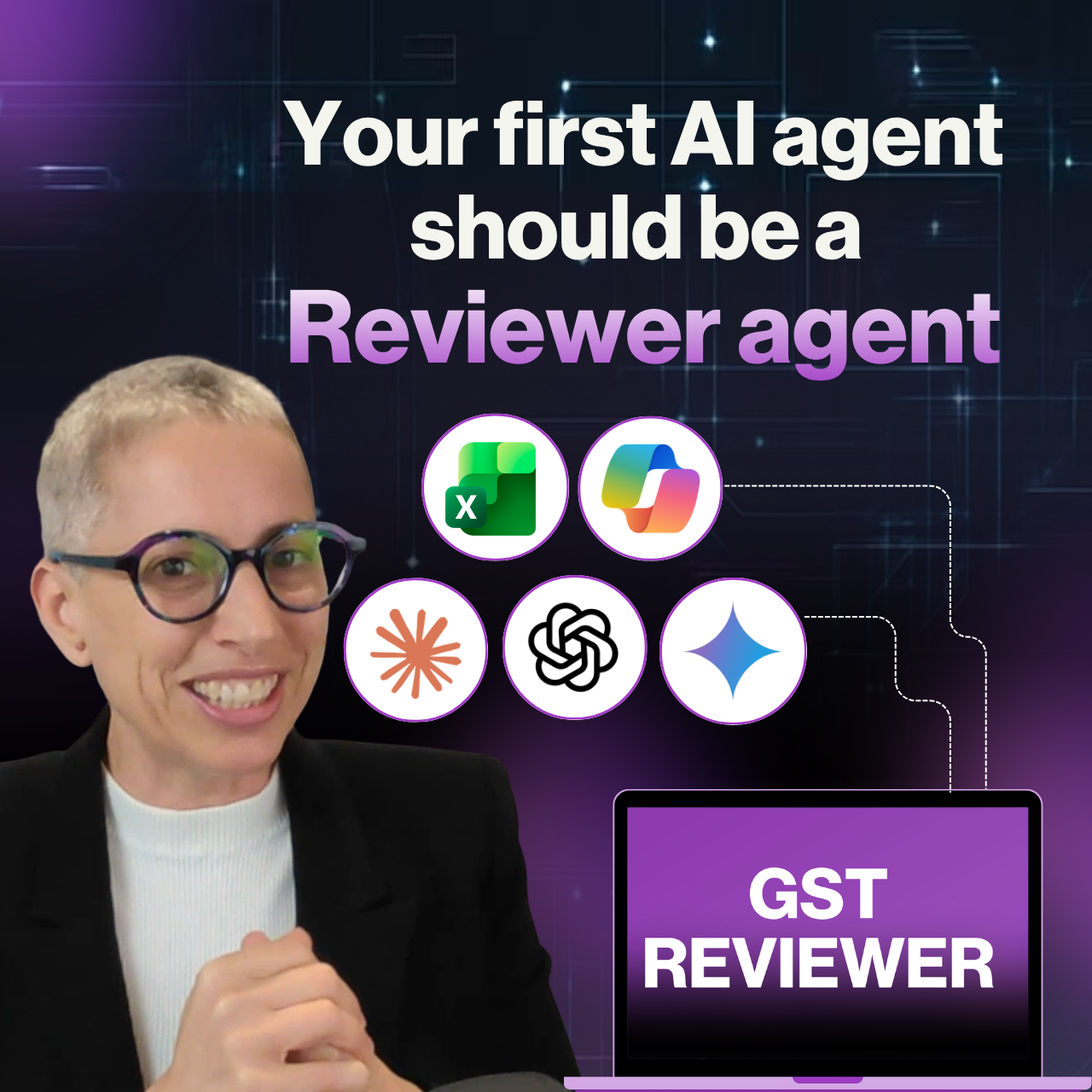
Your first AI agent should be a Reviewer agent
Remember the prompt party?
A few weeks ago, a group of accountants and bookkeepers in my AI club brought the prompts they use for GST review. Everyone copied one another’s, tested them, and improved their own.
That was a lot of fun.
But it was not just a prompt swap.
It showed why a GST reviewer is such a good first agent.
It is repeatable.
It is high value.
It sits in a clear workflow.
It improves the work before it reaches the senior reviewer.
I am doing the prompt party again next week. Details at the end.
If you are in another field, notice the structure, because there are surely similar processes in your world.
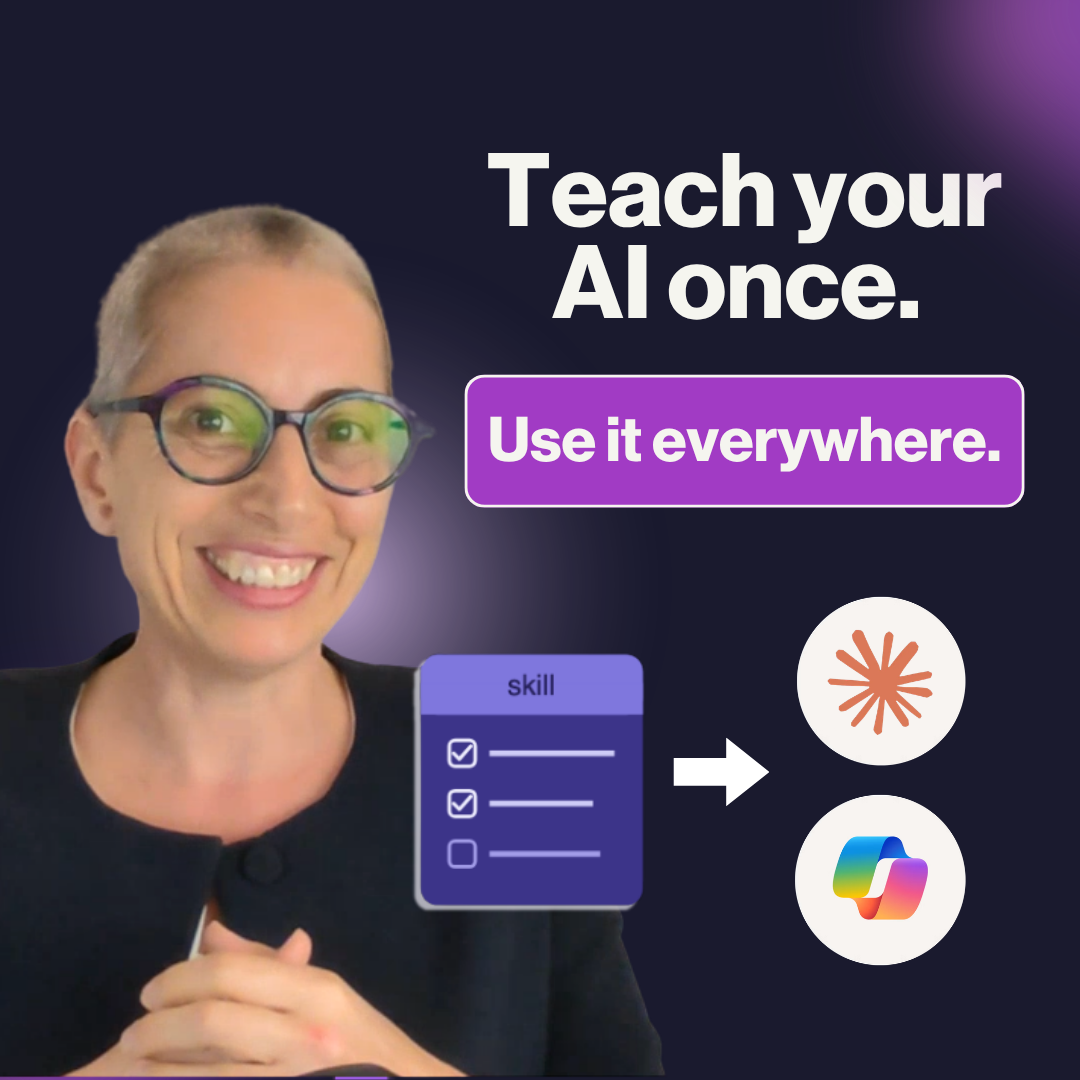
Teach your AI once. Use it everywhere.
Are you feeling like there's a lot more you could be doing with AI today than what you're actually doing?
Well, you're not alone.
Let's look at the three drivers of powerful, impactful, fast AI adoption, so you can work out where you're actually at, and what you can do today to close those gaps.
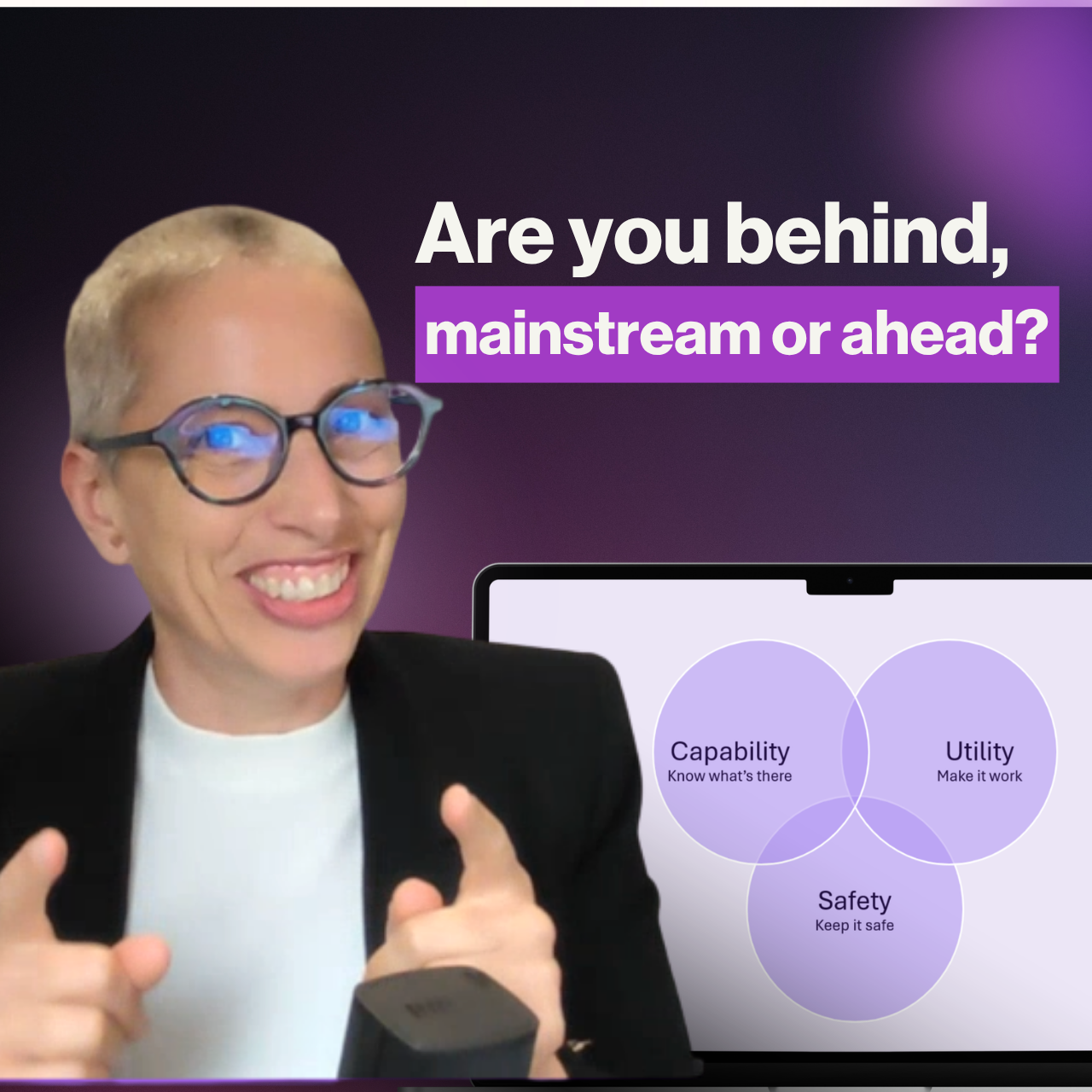
Are you behind, mainstream or ahead?
Are you feeling like there's a lot more you could be doing with AI today than what you're actually doing?
Well, you're not alone.
Let's look at the three drivers of powerful, impactful, fast AI adoption, so you can work out where you're actually at, and what you can do today to close those gaps.
Are your prompts too long?
In our last co-working session at the AI club for accountants, we ran an experiment - a prompt party!
Everyone brought the prompt they use for their GST reviewer agent.
We shared them all, and we tried each other's. It was a lot of fun.
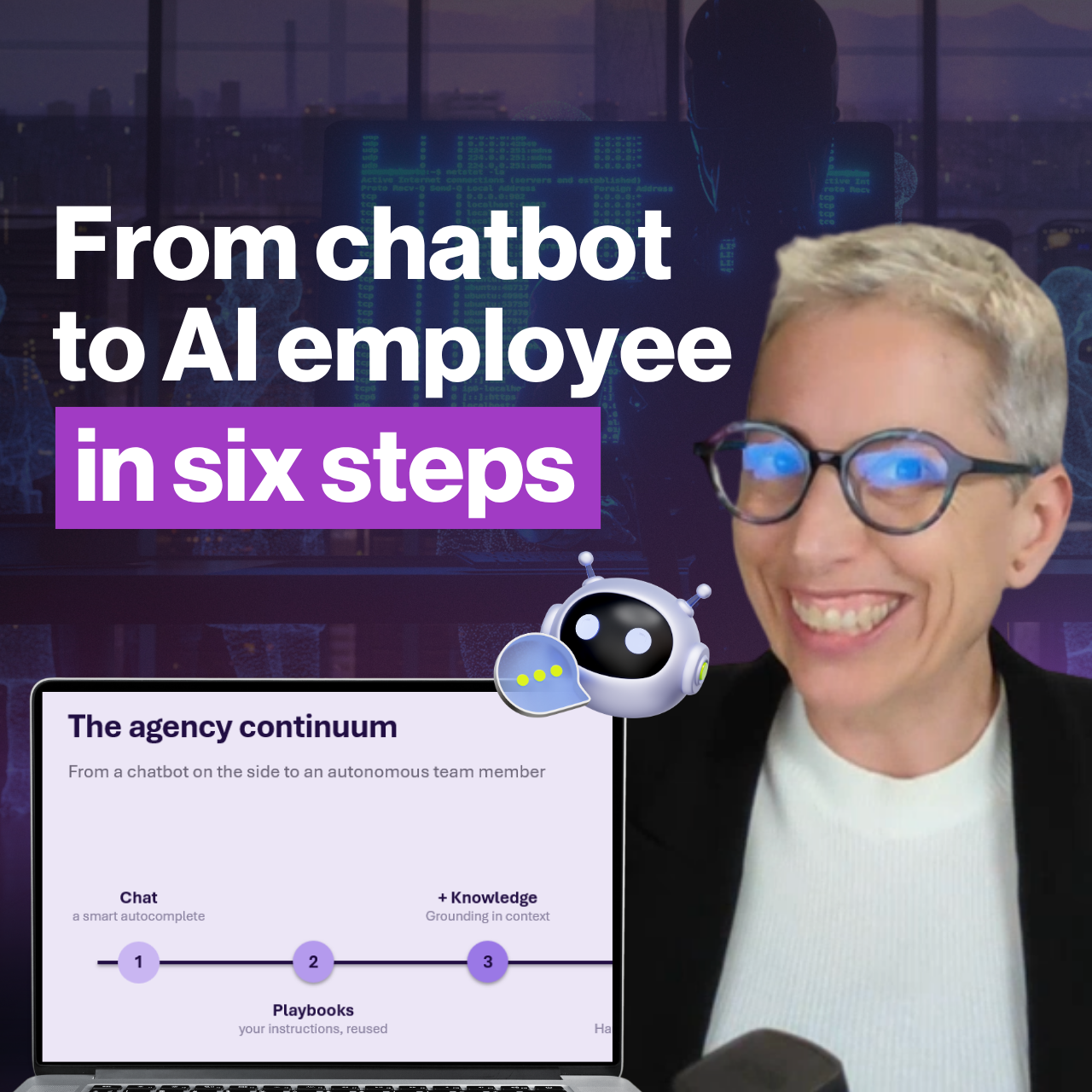
From chatbot to AI employee in six steps
I save the prompt that drafts our engagement letters and share it with my whole team. Is that an agent?
I set an AI to watch my inbox for receipts, drop them into a folder, and record the figures in a spreadsheet. Is that an agent?
I have AI that prepares our month-end, the whole thing, end to end. Is that an agent?
I don't think it matters much what we call an agent anymore. The thing is that even if you never actively create an agent in your business, the AI tools you are already using are becoming more and more agentic.
And you need to be… prepared.

The magic I do with Claude (and why I'm still careful)
Everyone is doing magic with Claude. And most accounting firms are not very comfortable unleashing it. Rightfully so.
Let me show you some of the magic I do with Claude. Then I'll tell you what I think you should do with it to keep safe. Then how you can get started too.
How (not) to get in trouble with AI
You could give a client advice today based on an AI summary, and be confidently, totally wrong. Because the document manipulated your AI into giving you bad advice.
I know, because last week, in an AI training at a law firm, I did exactly that. I poisoned a document.
Let me show you.
Copilot Cowork is here. Where should you start?
Copilot Cowork is now available to everyone. No longer early release.
Let’s look at what it is, what most people start with and a caveat you need to be aware of.
Do you know how I found all that out less than a week after it was released?
Last week at our AI with Inbal implementation session one of the accountants was demonstrating something she had built with Copilot Cowork while it was still early release. As she shared her screen, we noticed it no longer said "early release frontier". So we all looked it up. We figured out what had happened. Then we all experimented with it and shared what we had done.
That is where a lot of what I am about to show you came from. I love learning together ✨
How to Teach Your Team AI, 15 Minutes at a Time
Today, let’s focus on the first. How you keep upskilling your team.
Because big training days are great. Everyone gets excited. But the technology evolves and there’s just so much that people can pick up in a day. So how do we keep it up?
You can't run a training day every other day. So you need a different shape. A rhythm.
Are you on Microsoft Frontier? You probably should be.
Your Copilot licence might be doing a lot less than it could.
Not because the features aren't there. Because nobody turned them on.
In this week's briefing, I share two real examples from our club's live implementation sessions, and explain what Microsoft Frontier is and why your firm should probably be on it.
What the new Xero and Claude integration actually does (and doesn't do)
I got really excited about Xero and Claude integrating.
Then I got unexcited.
Here’s exactly what happened.

Your next AI colleague watches, listens, and talks. All at once.
There is a new AI model in town. And this one shows us where things are heading.
It is called Interaction Models. It comes from Thinking Machines Lab, the company founded by Mira Murati, who was CTO at OpenAI. It is in research preview right now.
It’s not in your tools yet, but let’s have a look so that we understand what’s coming.
Get the latest developments in AI each week straight to your inbox!