Your first AI agent should be a Reviewer agent
Remember the prompt party?
A few weeks ago, a group of accountants and bookkeepers in my AI club brought the prompts they use for GST review. Everyone copied one another’s, tested them, and improved their own.
That was a lot of fun.
But it was not just a prompt swap.
It showed why a GST reviewer is such a good first agent.
It is repeatable.
It is high value.
It sits in a clear workflow.
It improves the work before it reaches the senior reviewer.
I am doing the prompt party again next week. Details at the end.
If you are in another field, notice the structure, because there are surely similar processes in your world.
Low risk, high usefulness
Reviewer agents are one of the AI agent patterns taking hold in professional services.
Others include drafters, data extractors and monitors.
Reviewers are a strong place to start because they can be useful without being especially autonomous.
Set up properly, they are low risk.
They do not send anything.
They do not change source files.
They do not lodge returns.
They review, comment and leave a trail.
The time saving comes from putting that review earlier in the workflow, before the work reaches the senior reviewer.
The real win is not that AI replaces the senior reviewer.
It is that the preparer reaches the senior reviewer with better work.
Fewer obvious issues.
Fewer avoidable questions.
Less back and forth.
That is where the time saving lives.
If the agent also improves every time something still slips through, the whole workflow gets stronger.
Build it where the work happens
You can build this many ways.
It might be a Copilot agent, a Claude skill, an Excel skill, or even a saved prompt in a spreadsheet.
Some firms will go further, into Copilot Studio or Claude, where the agent can download reports and move closer to full workpaper prep. More autonomy, more risk.
But the model is the same: the preparer uses the AI reviewer to improve the work before it goes to the senior.
The review layer is becoming normal
The numbers coming out of the club are already real.
Marc runs the reports, runs the prompt, and files the return in 15 minutes. He reckons he will have it under ten soon.
Ben got the manager-level sense-check down to about six minutes.
Louise and Sarah’s reviewer inserts a review tab straight into the spreadsheet, with findings, actions and approval status.
The bigger shift is not just speed.
Reviews are happening once, to a higher standard, and staff are learning from the AI as they go.
Every time I have seen people build AI reviewer agents, they ran them on old files and found things humans had missed.
Humans get tired. AI does not get tired, but it can still be inconsistent.
That is why the answer is not blind trust, and it is not caging the tool.
Nothing goes out without a human review.
We are getting very close to saying: nothing should go out without an AI review either.
And that means it needs to sit inside the workflow, not outside it.
OK, forget GST
It can be income tax returns. It can be advice letters. In your business, what might it be?
Where does your team need AI to review and improve the work before it goes to a senior?
Which processes happen often enough that the time saving would actually add up?
That is where you want to get started.
The prompt is just part of it
The difference comes from how you set up the work around it: what you give it, where you let it work, and what it leaves behind.
Give it an example, not just a description.
Let it work inside a real template, not a blank chat.
Let it work inside the workpaper, so it leaves a trail the next person can follow.
The rest is sequence: knowing when to let it be loose, and when to hold it tight.
Let’s build yours together
So if that is your world, you have a chance to do it with me next week, alongside other accountants and bookkeepers.
Prompt party.
We will set it up together.
We will talk through risk, data confidentiality and safe use.
We will share prompts, improve them, and look at what makes a reviewer prompt work.
We will also look at the two-reviewer model, where one agent reviews after another.
Not a lecture. You are going to build an AI agent that actually works by the end of that session.
You will need GST workpapers, or something similar, and a Copilot licence.
If you use Claude, ChatGPT or Gemini, the structure transfers. I will demonstrate in Copilot, but the real work is in the workflow and the prompt.
You do not need to be technical. If you can download a report from Xero, you have all the skills required.
Wednesday 19 August | 90 minutes | Online | $100
Register here: inbal.com.au/gstreviewer-workshop
Bring your GST pile.
We will turn it into your first agent.
You will walk back into your firm with a working process, not another idea to explain.
We’ve got this.
--
Inbal Rodnay
Guiding Firms in AI Adoption and Automation
Keynote speaker | AI Workshops | Executive briefings | The Tech Savvy Firm
When you are ready, here is how Inbal can help:
AI for Accountants Club
- Meetups: See what other firms are actually doing: real use cases, real results, no polish.
- The Radar: What to act on now, what to watch, and what to safely ignore
- The resource hub: prompt packs, policy templates, and implementation guides
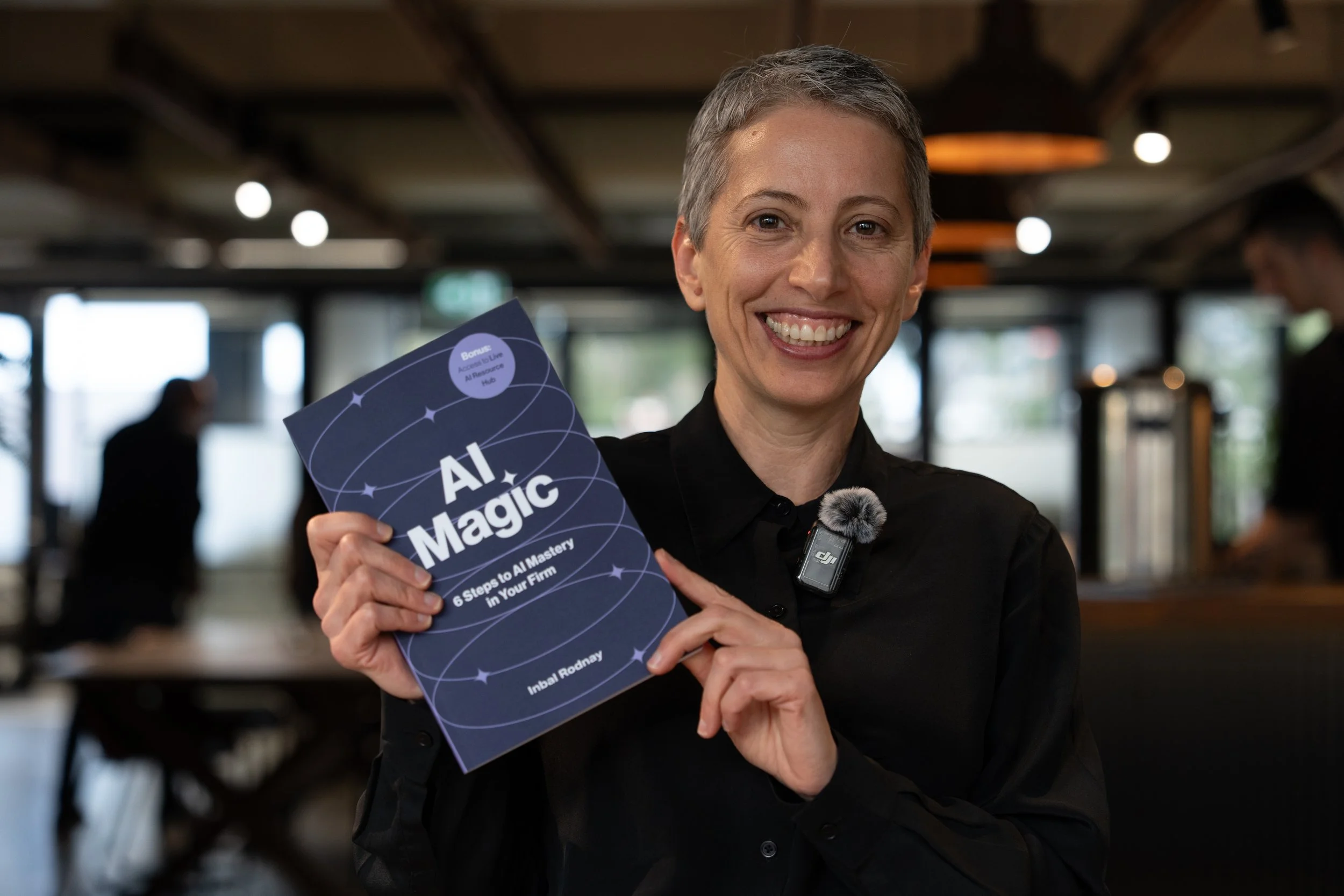
AI Magic: 6 Steps to AI Mastery In Your Firm:
- A step-by-step roadmap that shifts your firm from dabbling to safe, impactful AI Adoption
- A hands-on guide for mastering AI in your firm, solo practice, or team.
- Access to a live AI Resource Hub
GST Reviewer Workshop
- A real AI agent of your own, built live in your own Microsoft Copilot
- Not a demo, you watch
- A list of 32 agents that other firms are building that you can build the same way.